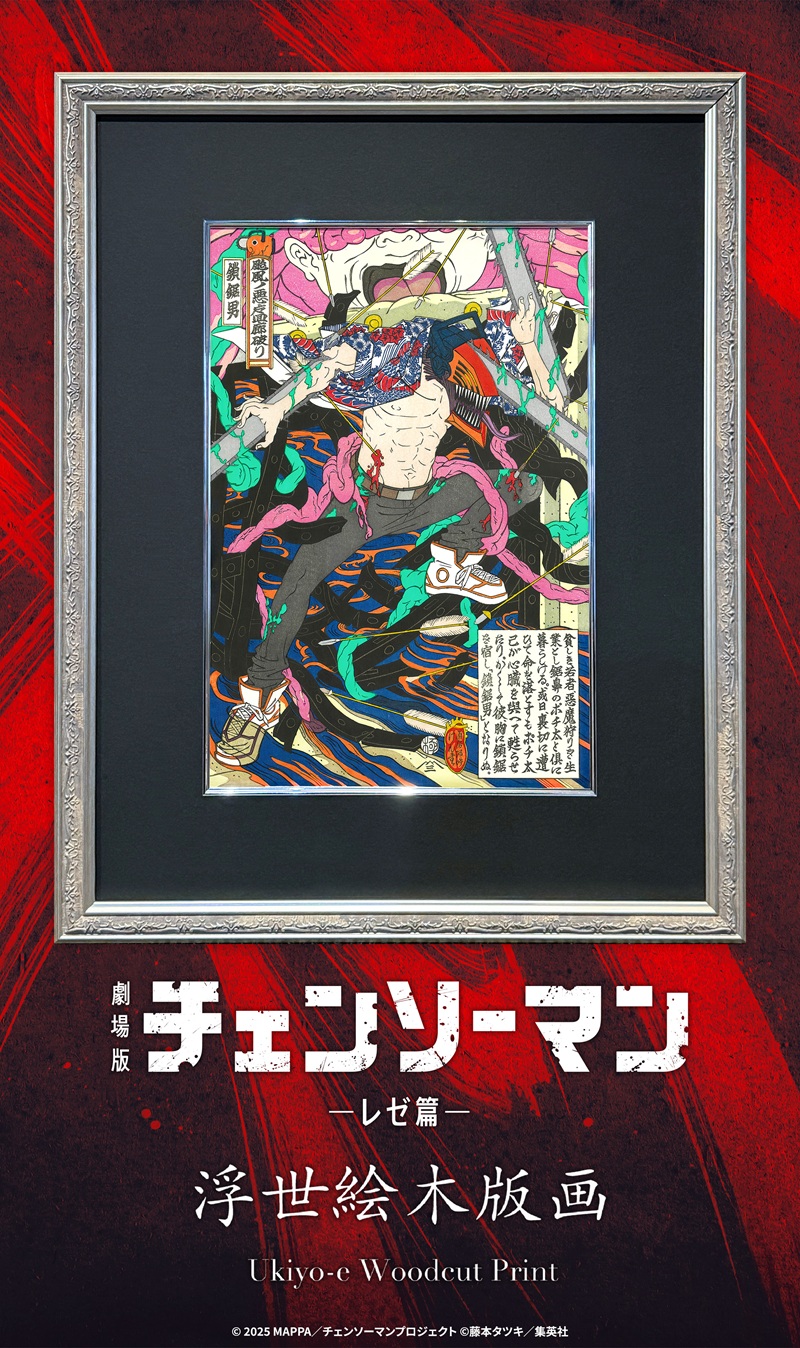
Ukiyo-e woodblock prints of the theatrical film "Chainsaw Man: Reze Arc" will be released worldwide simultaneously on Friday, March 27, 2026 at 12:00 PM Japan time.
AKIHABARA PREMIUM COLLECTION will be releasing ukiyo-e woodblock prints of the theatrical film "Chainsaw Man: Reze Arc" worldwide simultaneously on Friday, March 27, 2026 at 12:00 PM Japan time.
TOKYO DUB AGENT COMPANY, LTD. (Representative Director: Kazuyoshi Takagi, hereinafter referred to as TDA) will release the Ukiyo-e woodblock print of the theatrical version of "Chainsaw Man: Reze Arc" worldwide simultaneously from 12:00 JST on Friday, March 27th, on its e-commerce platform "AKIHABARA PREMIUM COLLECTION," which develops the ultimate series of works that bring together Akihabara otaku culture and the Japanese passion for craftsmanship.
Sales site: AKIHABARA PREMIUM COLLECTION
URL: https://www.akihabara-premium.com/blogs/archives/csm_ukiyoe
Promotional video for the work
Chainsaw Man's first ukiyo-e woodblock print
This project is a ukiyo-e woodblock print that fuses the worldview of "Chainsaw Man" with "Zhang Shun, the White Leaper of the Waves," one of the 108 heroes of the popular Suikoden.
In the original work, Zhang Shun is depicted as a dynamic hero who freely moves through the water. The composition, in which he cuts through raging waves, his muscles are exaggerated, and power radiates from his entire body, is the epitome of Kuniyoshi's unique dramatic direction. In this collaboration, the dynamism of blood splatters and splashes of water are likened to his battle with the typhoon demon in the theatrical version, creating a new image of the hero.
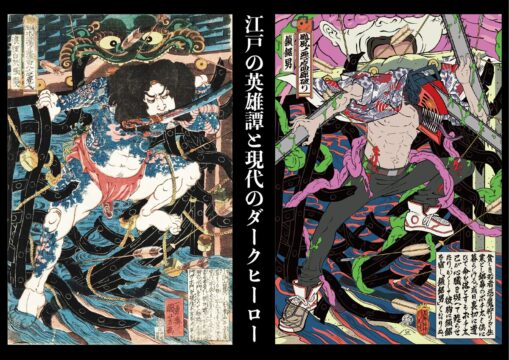
Edo-period heroic tales and modern-day dark heroes.
Kuniyoshi's exaggerated depictions of the human body and excessive energy are surprisingly compatible with "Chainsaw Man." The delicate colors created by the traditional ukiyo-e carving and printing techniques, and the sharp tension generated by the chainsaw blade, all contribute to this appeal.
Within the traditional Japanese art form of Ukiyo-e, a new image of a dark hero is born.
When creating Ukiyo-e woodblock prints
Ukiyo-e is a representative traditional craft of Japan. However, the entire industry is currently facing a crisis, and the number of artisans who are carrying on this traditional technique, which has continued since the Edo period, has shrunk to just a few dozen throughout Japan. While efforts are being made to train young people, the reality is that the amount of production, including raw materials, is decreasing day by day, and the number of artisans is dwindling.
Together with active artisans (painters, engravers, and printers) who are dedicated to passing on the woodblock printing techniques of Ukiyo-e to future generations, we aim to introduce the beauty of Ukiyo-e to people all over the world from a new perspective by combining traditional techniques with "Chainsaw Man." Furthermore, we will contribute to ensuring that this culture, which Japan proudly presents to the world, does not die out, but rather to its development.
We want to share this with you. The true essence of traditional Japanese crafts.
Key points of this work
Chainsaw Man is collaborating with Utagawa Kuniyoshi, a genius ukiyo-e artist from the late Edo period, on his masterpiece "One of the 108 Heroes of the Popular Water Margin: Zhang Shun, the White Leaper in the Waves."
A timeless fusion has been achieved through the traditional woodblock printing techniques of Ukiyo-e, which have been passed down since the Edo period.
Kuniyoshi's depiction of Zhang Shun's dynamic physique, the raging waves, and the tension of the splashing water—this Edo-period heroic tale is reinterpreted as a modern dark hero.
The woodblocks are intricately carved, and the printing is done by skilled craftsmen over and over again. The deep colors produced by traditional pigments and the bold visuals that evoke blood and the traces of a blade create a tension-filled contrast. Please come and appreciate this contrast up close.
Past and present, classical and pop culture, heroes and dark heroes. Here, a unique ukiyo-e print is born, merging and tearing through all boundaries.
"Ukiyo-e design T-shirts & hoodies" released simultaneously.
T-shirts and hoodies featuring designs from the ukiyo-e woodblock prints for the theatrical film "Chainsaw Man: Reze Arc" will be released simultaneously with the ukiyo-e prints themselves.
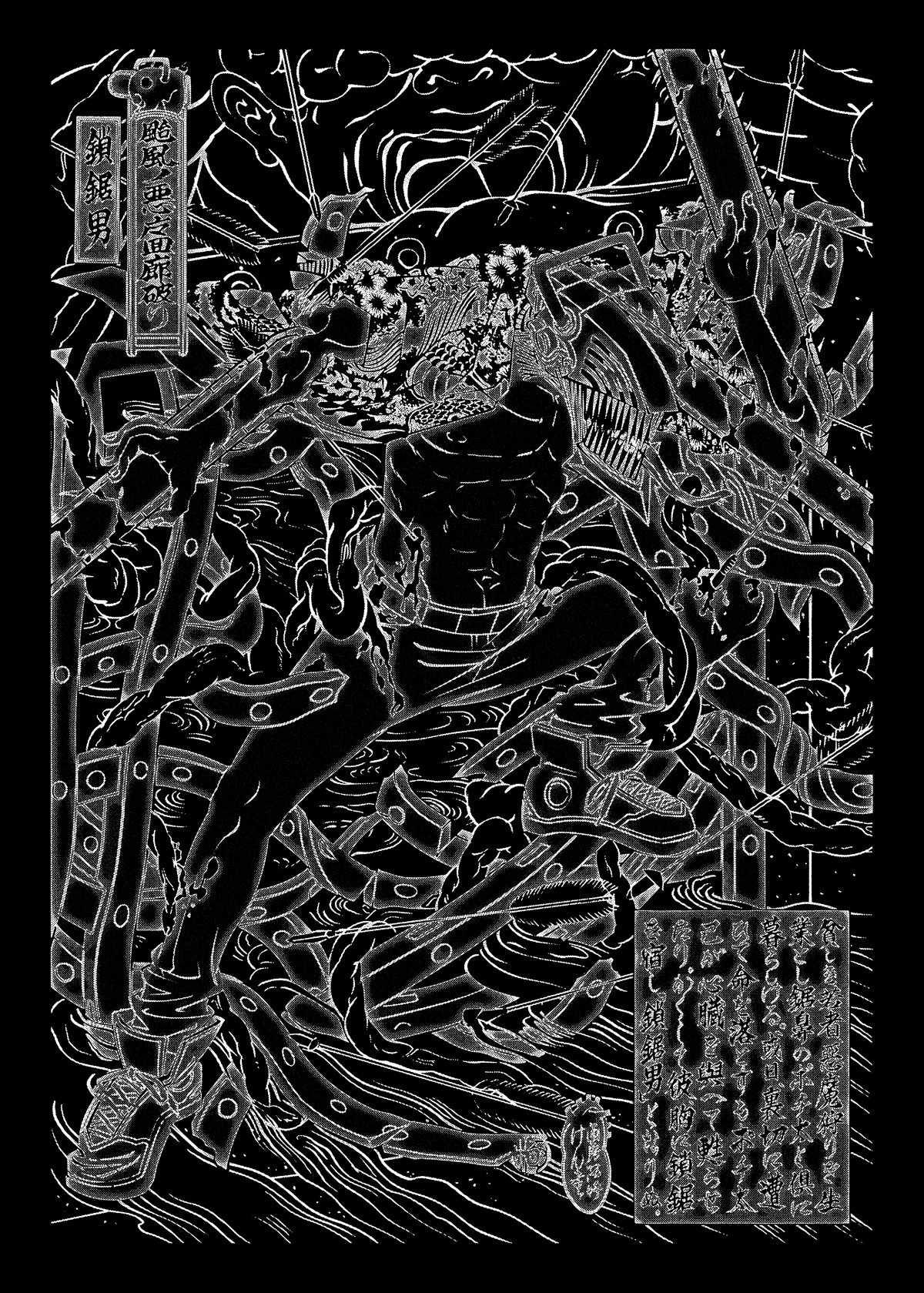
This product features a silkscreen print on the back of the woodblock print known as "ink lines" in Ukiyo-e. The front features a design of "Chainsaw Man," a representation of "Chainsaw Man" from Ukiyo-e, and Pochita.
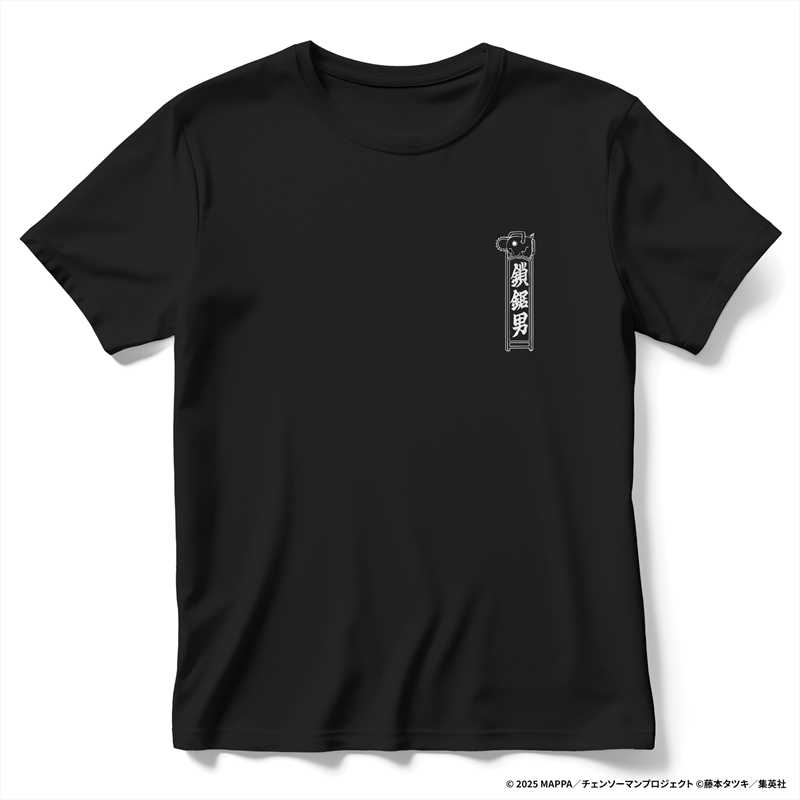
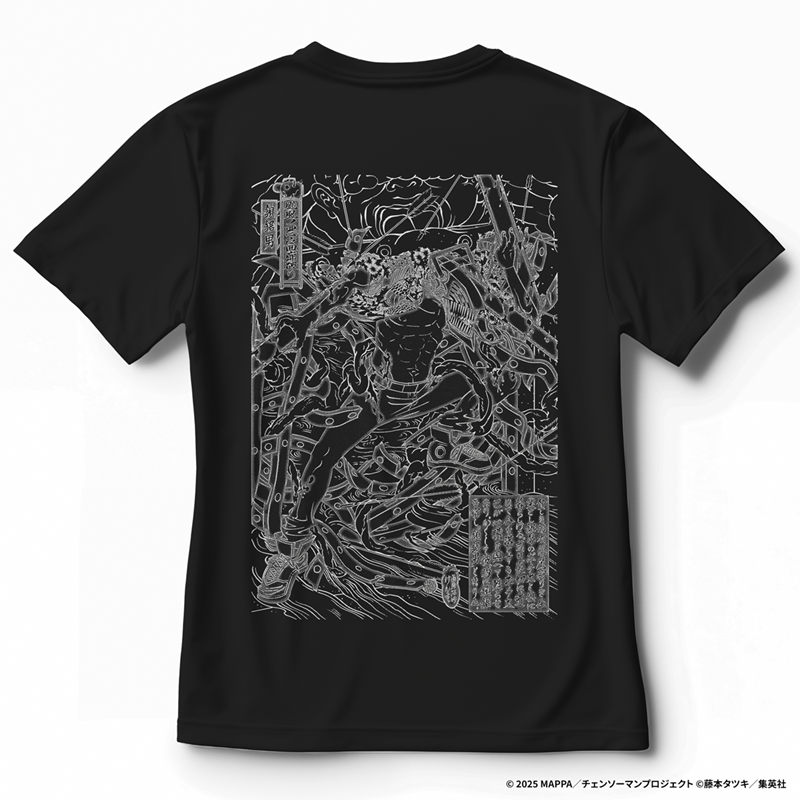
Chainsaw Man: Reze Arc (Theatrical Film) Ukiyo-e Woodblock Print "Typhoon Demon Corridor Breakthrough" T-Shirt
Selling price: 9,800 yen + tax and shipping
Size: Free
Sales quantity: Sales will end once the planned quantity is reached.
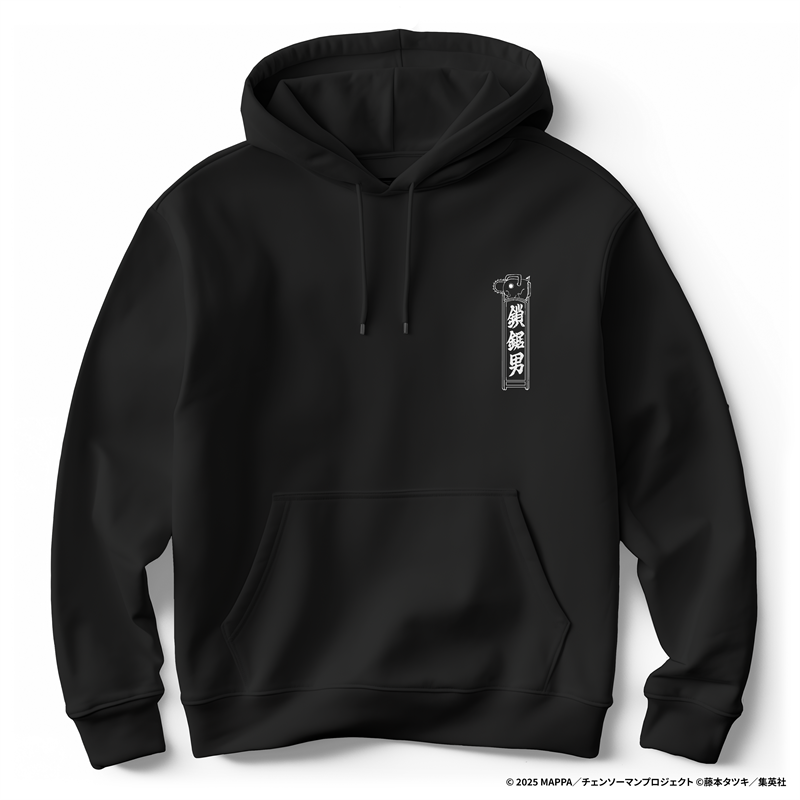
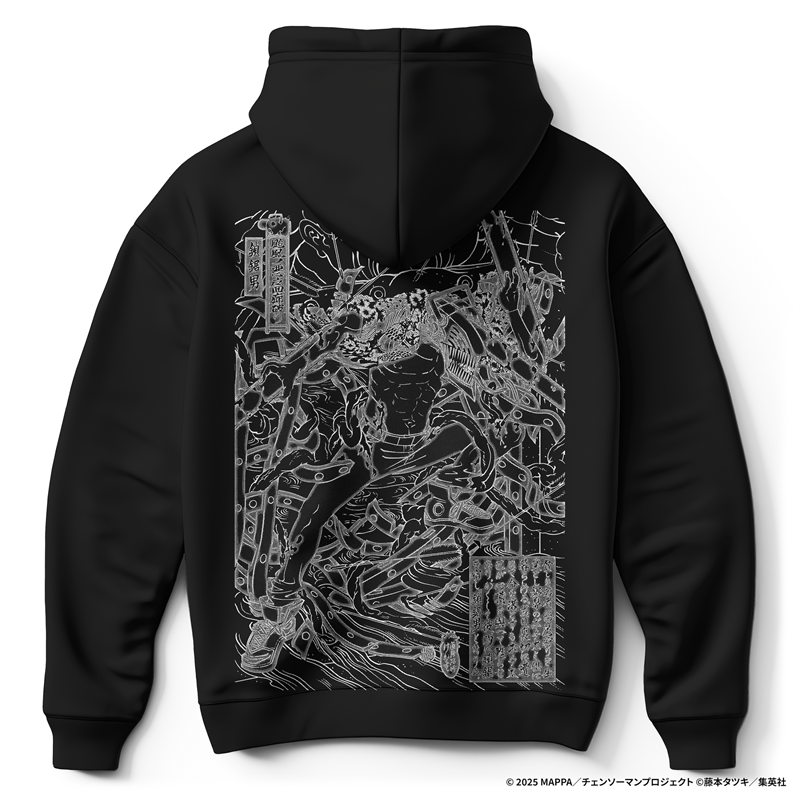
Chainsaw Man: Reze Arc (Theatrical Film) Ukiyo-e Woodblock Print "Typhoon Demon Corridor Breakthrough" Hoodie
Selling price: 12,800 yen + tax and shipping
Size: Free
Sales quantity: Sales will end once the planned quantity is reached.
Sales site: AKIHABARA PREMIUM COLLECTION
URL: https://www.akihabara-premium.com/blogs/archives/csm_ukiyoe
The dedication to the creation of Ukiyo-e woodblock prints
【artist】
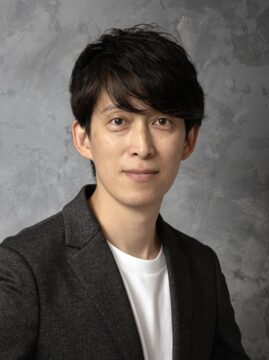
Akira Shiozaki
Born in Machida City, Tokyo in 1972.
Completed graduate studies in fine arts at Tama Art University.
A Japanese painter and ukiyo-e artist who primarily focuses on Japanese paintings from the Heian to Edo periods, re-evaluating the diversity of themes and the high level of craftsmanship, while reconstructing the styles and essence of the time. By creating two-dimensional paintings that appeal to the aesthetic sensibilities and feelings of contemporary Japanese people, this artist presents the existence and potential of "Japanese painting" in the art world.
Location of the artwork:
Rinzai sect Myoshinji school Ryugenji Temple (Tokyo) / Religious corporation Senshinzan Seirenji Temple (Hiroshima Prefecture)
Shingon sect Inariyama Komyoin (Kanagawa Prefecture) / Jodo sect Fumonji (Yamaguchi Prefecture) / Kanda Myojin (Tokyo)
【Japanese paper】
The ultimate Echizen raw-spun paper by Living National Treasure Ichibei Iwano

《9th Generation Iwano Ichibei》
He succeeded to the name of Ichibei Iwano IX in 1978. In June 2000, he was designated a holder of the nationally important intangible cultural property "Echizen Hosho" (Living National Treasure). He continues to make "Echizen Nama-suki Hosho," a type of paper that has been passed down through generations in the unique climate of Echizen.
"Kizuki Hosho" is a type of washi paper made from mulberry bark, a true washi paper rooted in Japanese tradition and history.
This ultimate Japanese paper, known for its smooth brushstrokes, is used not only for ceremonial paper in Shinto rituals but also for woodblock printing, and can withstand the pressure of hundreds of woodblock prints. We chose this paper with the hope that it will retain the texture of traditional Japanese paper from the Edo period and continue to be used for 100 or even 200 years to come.
The ultimate in hand-carving and hand-railing aesthetics.
[Carving]
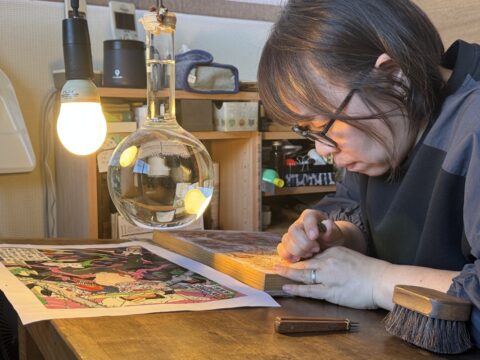
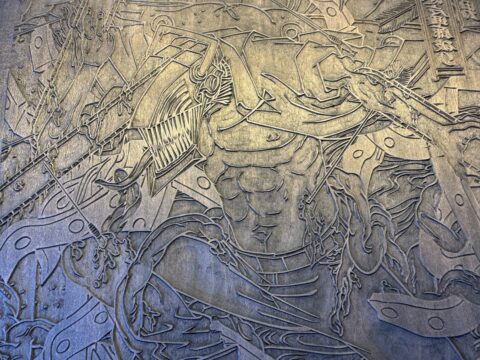
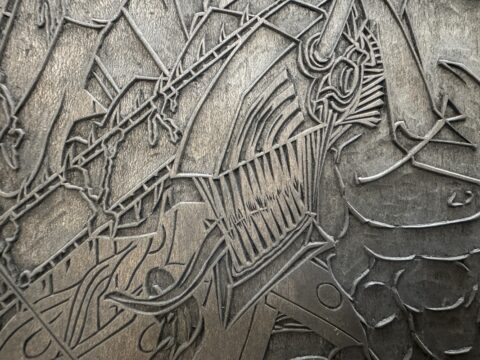
Ukiyo-e woodblock prints begin with dividing the woodblock into sections based on the design, and then carving each section individually. As you can see, this is an incredibly meticulous process, and even a deviation of just one millimeter can have a significant impact on the entire image. The ability to carve perfectly without any discrepancies is truly a testament to the craftsman's years of training.
From the outlines, hair, and overall form to the title and even the background details that aren't visible in the colors, everything is meticulously carved by hand. Because such delicate woodblocks are used, they can chip or break during the thousands of printings, which is why ukiyo-e prints are always produced in limited quantities.
[Tattoo Artist – Kayoko Suga]
After graduating from high school, she applied to the Arakawa Ward, Tokyo's artisan training support program to become an apprentice craftsman. After seven years of training as an Edo woodblock print engraver, she became independent. Currently, as one of the few female traditional craftspeople certified by the Ministry of Economy, Trade and Industry, she contributes to the preservation of Ukiyo-e woodblock print culture with her exceptional skills.
Demonstration at the Edo-Tokyo Museum's "Great Edo 808 Towns Exhibition" in 2003 (Heisei 15).
Demonstration at the "One Hundred Famous Views of Edo Completion Commemorative Exhibition" at Nihonbashi Mitsukoshi in 2005 (Heisei 17).
Demonstration at the Edo-Tokyo Museum's "Hokusai Manga Exhibition" in 2008 (Heisei 20).
Member of the Ukiyo-e Woodblock Printing Carving and Printing Techniques Preservation Association
Member of the Tokyo Traditional Woodblock Printing Crafts Cooperative Association
[Printing]
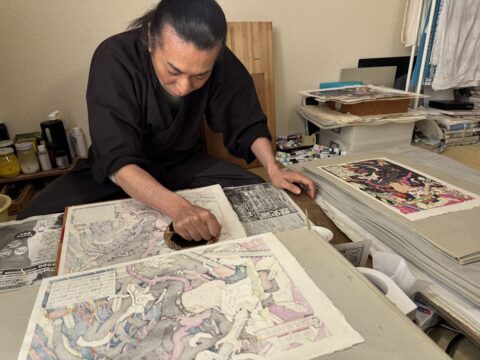
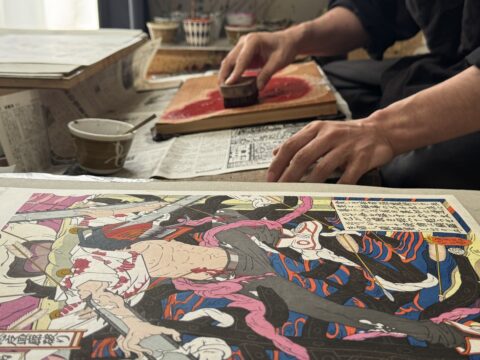
Next, the printing process begins, using traditional paints for each color. This is a world that demands the skill of a craftsman, as even a 1mm deviation or insufficient pressure can cause the entire image to be misaligned.
Furthermore, since the final color wouldn't be known until it was actually rubbed, we pursued the ultimate color by changing the paint dozens of times.
[Printer – Takuya Okada]
Born in Ibaraki Prefecture in 1983.
After graduating from high school, he studied Buddhist sculpture at Kyoto Traditional Crafts University, and after graduation, he trained as a woodblock printmaker at Watanabe Woodblock Printing.
He became independent in 2012. With approximately eight years of experience, he possesses high technical skills as a printer.
Watanabe Mokuhan is a publisher of Shin-hanga (new prints), exemplified by Kawase Hasui, and has mastered many of the blurring and fading techniques used in Shin-hanga. The gold and platinum scattering and fixing techniques used in this work were his own suggestion. He is a new generation printer who actively engages in new techniques in addition to traditional ones.
A craftsman whose techniques are designated as Intangible Cultural Properties by the Agency for Cultural Affairs.
– Member of the Tokyo Traditional Woodblock Printing Crafts Cooperative Association
Product Information
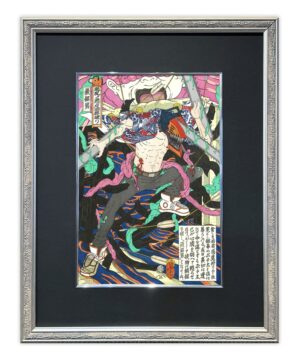
Theatrical film "Chainsaw Man: Reze Arc" Ukiyo-e woodblock print "Typhoon Devil Corridor Breakthrough"
Selling price: 65,000 yen + tax and shipping
Number of sets available: Limited to 500 sets worldwide
specification:
– Illustration (W: approx. 240mm × H: approx. 360mm)
– Includes a frame (W: approx. 425mm x H: approx. 540mm)
Frame: Wood, backing board – wooden plywood, acrylic
Mat: Paper
Washi (Japanese paper): Echizen raw-made paper by Ichibei Iwano, Living National Treasure.
Ukiyo-e publisher: Bansan Co., Ltd.
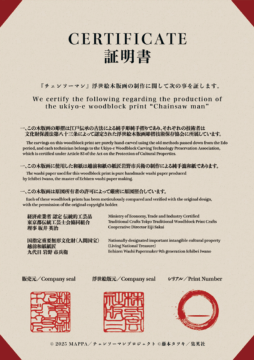
The artwork will be delivered in a box with original ukiyo-e patterned wrapping paper. A certificate of authenticity confirming that it was created using traditional ukiyo-e woodblock printing techniques will be included.
Sales site: AKIHABARA PREMIUM COLLECTION
URL: https://www.akihabara-premium.com/blogs/archives/csm_ukiyoe
Work Introduction
Denji (Kikunosuke Totani), a young devil hunter belonging to the Public Safety Special Division 4, has become "Chainsaw Man" with the heart of a devil. While excited about a date with his crush Makima (Tomori Kusunoki), he gets caught in a sudden downpour and, while taking shelter from the rain, coincidentally meets a girl named "Reze" (Reina Ueda).
She works at a nearby cafe and smiles kindly at Denji, and the two quickly become close. From this encounter onward, Denji's daily life begins to change…
© 2025 MAPPA/Chainsaw Man Project © Tatsuki Fujimoto/Shueisha
Tokyo Dub Agent Co., Ltd. ▶ Press Release

Related Article
 Pasela collaboration for the movie “Chainsaw Man: Reze Arc” has been announced!
 The design of the zipper is applied to the blade of the chainsaw, which is impressive! From “Chainsaw Man” comes a plush toy figure “Cutie1”. Reservations are being accepted at “AmiAmi”.
 We also hold fairs where you can get goodies and film stickers! 6/19 released “Magical Girl Lyrical Nanoha Detonation” Blu-ray & DVD Gamers Information
 3/26-let corosense- turned into cans or vending machines? Assassin class TV anime [JOY CAN PREMIUM] and [eco tote bag will be released!
 New products from the theatrical anime “Rascal Doesn’t Dream of a School Bag Girl” are now available! A fair where you can get bonus bromides (8 types in total) will be held at Animate nationwide!